

Podcast Veto — chapters on the spoken-word medium
An ordered set of chapters on podcasting as a means of public communication: how a recorded conversation carries a message differently from a written one, how a single appearance is proposed, prepared for and recorded, and what is left on the page once the episode has been heard.
Start with the chapter indexRecently filed
More
The publication
Why this is arranged as chapters and not as a feed
Most writing about podcasting arrives as a stream of dated posts, which suits a subject that changes weekly. This one does not change weekly. What a microphone does to an argument, what a listener retains from a spoken figure, and what a transcript is worth are all much the same now as they were when the medium was young, so the material is set out as chapters meant to be read in order rather than as a list with the newest item on top.
The order runs from the general to the particular. It opens with what the medium does to a message at all, then follows a single appearance through its life — proposing it, preparing for it, recording it, and writing the page that outlives it — and closes with what can honestly be observed afterwards and the vocabulary that turns up along the way.
Every chapter is written in general terms. There are no case studies here, no rankings of platforms and no recommendations of equipment by name, because those age badly and because the argument in each chapter holds without them.
The chapters in the middle
One appearance, followed from the pitch to the page
The Interview · Chapter 02
Preparing a spokesperson for an interview
Preparation for a recorded conversation is mostly subtraction. The useful work is not assembling a list of points to make; it is deciding in advance which answers will not be given, and being able to say so plainly when the question arrives.
The chapter sets out how to prepare from the likely questions rather than from the intended messages, why the boundary of a subject should be settled before the recording rather than discovered mid-sentence, and which small speaking habits survive an edit intact.
Read chapter 02
The Record · Chapter 03
Show notes and the written record
The episode is heard once. The page beneath it is read for years, and it is the only part of an episode a search engine can see. A useful one carries, at a minimum:
- A title that describes the subject rather than the guest.
- A two-sentence summary of what is genuinely discussed.
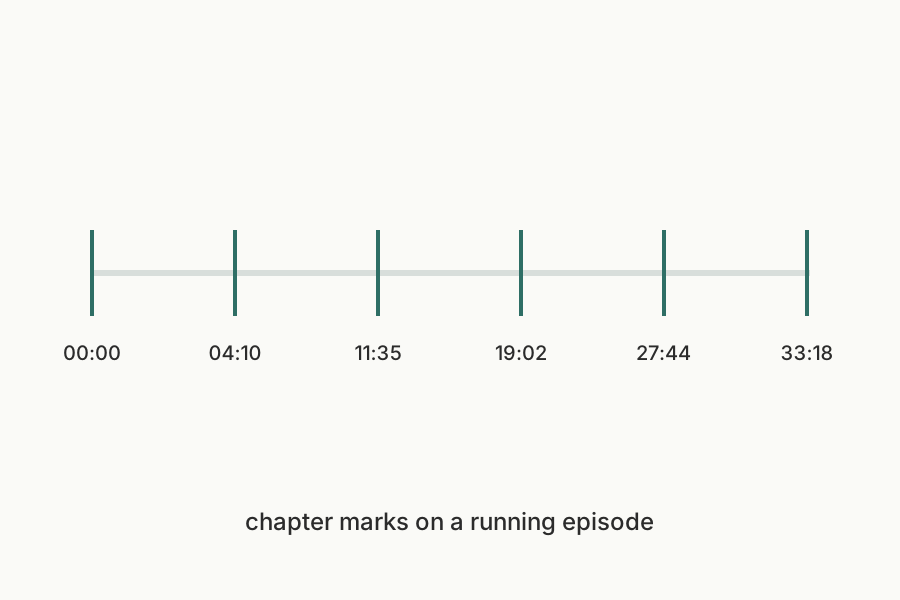
- Timed topic marks at each real change of subject, not one every two minutes.
- Links to everything referenced during the conversation.
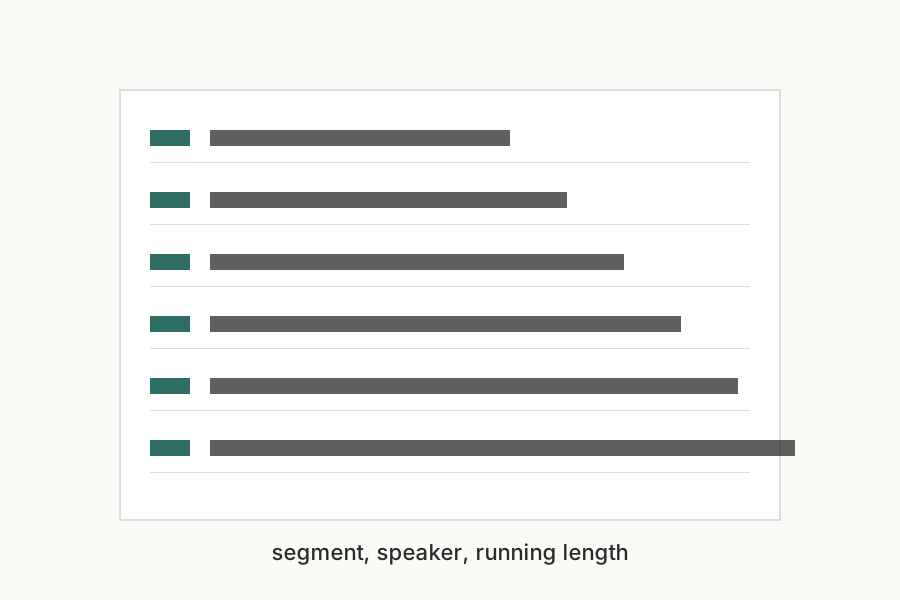
- A lightly corrected transcript with the speakers marked.
- Any correction, dated, at the top of the page rather than folded silently into the audio.
The Sound · Chapter 04
Audio quality and credibility
A listener has no vocabulary for room reflections or a clipped peak, so the discomfort those things cause is attributed to the nearest available cause, which is the person speaking. The same words, recorded worse, are received worse.
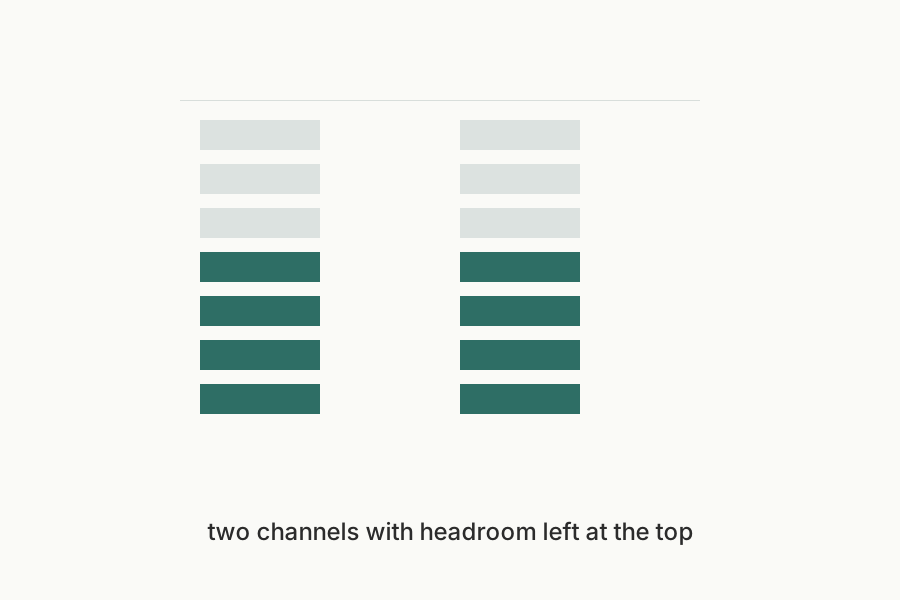
The chapter deals with the part of that which costs nothing: choosing a quieter room, holding a constant distance from the microphone, and setting a level that leaves headroom for the loudest thing anyone is going to say.
Read chapter 04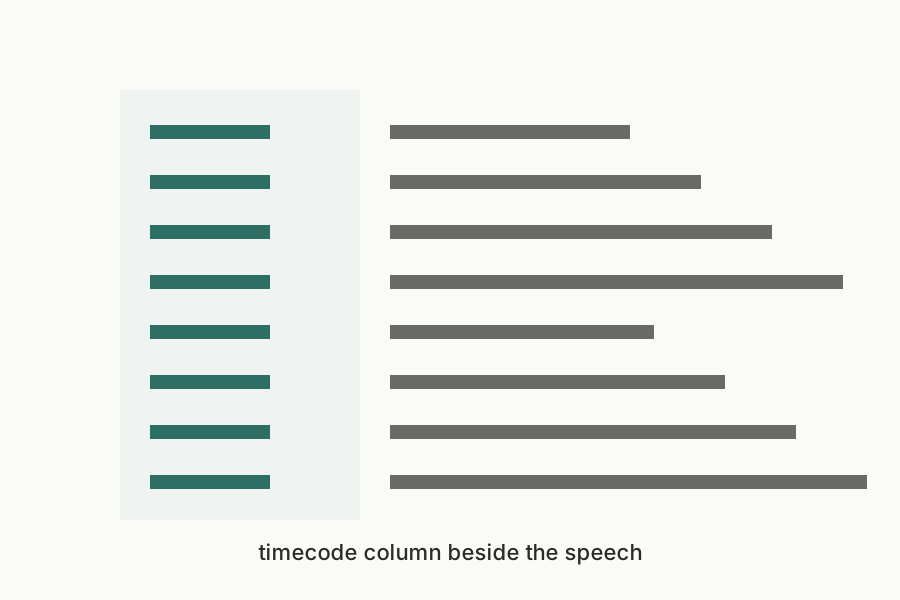
Figures
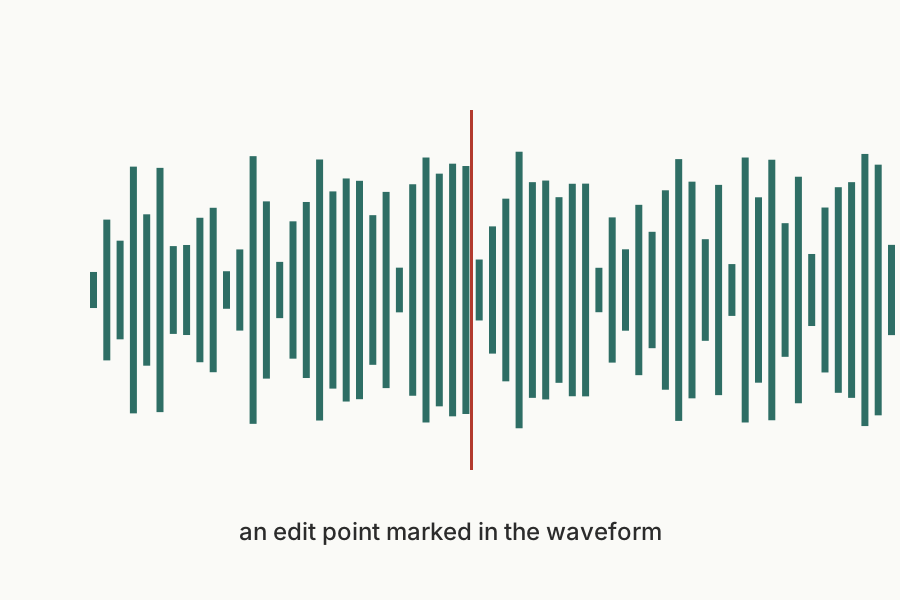
Three things that decide whether a recording is usable
Reading order
Every chapter on this site, in the order they were written to be read
- What a podcast does for a messageHow a recorded conversation carries meaning differently from a written statement.
- Preparing a spokesperson for an interviewPreparation as subtraction: deciding in advance what will not be said.
- Pitching a guest to a podcastProposing a segment rather than a person, and following up exactly once.
- Show notes and the written recordThe page beneath the audio, and why it outlives the episode.
- Audio quality and credibilityRooms, distance and headroom, and why listeners blame the speaker.
- Measuring a podcast appearanceWhat downloads cannot say, and what can honestly be observed.
- A short glossary of podcast termsPlain definitions for the production and distribution vocabulary.
- About Podcast VetoWhat the chapters cover, how they are ordered, and what is deliberately left out.
Orientation
Where the chapters go next
Every chapter page opens with the same compact index of its own headings, set to the right of the text on a wide screen and above it on a narrow one, so a reader who wants only the practical part of a chapter can reach it without scrolling through the argument for it.
Each chapter closes with two related chapters rather than a full list, which is usually enough to find the next useful thing. The full sequence is here, and it is repeated at the foot of every page.